Back to Home

Study Hall: Virtual Reality Notes App

A Personal Spatial Research Metaverse.

Have you ever noticed that your best ideas rarely happen while you're staring at a blinking cursor? Usually, they hit you while you're out for a walk, pacing your office, or even just reaching for a coffee. There’s a scientific reason for that. Barbara Tversky calls it "Spraction"—the fundamental truth that thinking is a combination of space and action. Our brains are hardwired to solve problems by moving through the world, yet we spend our research lives trapped in "Flatland," staring at 2D screens and buried folders.

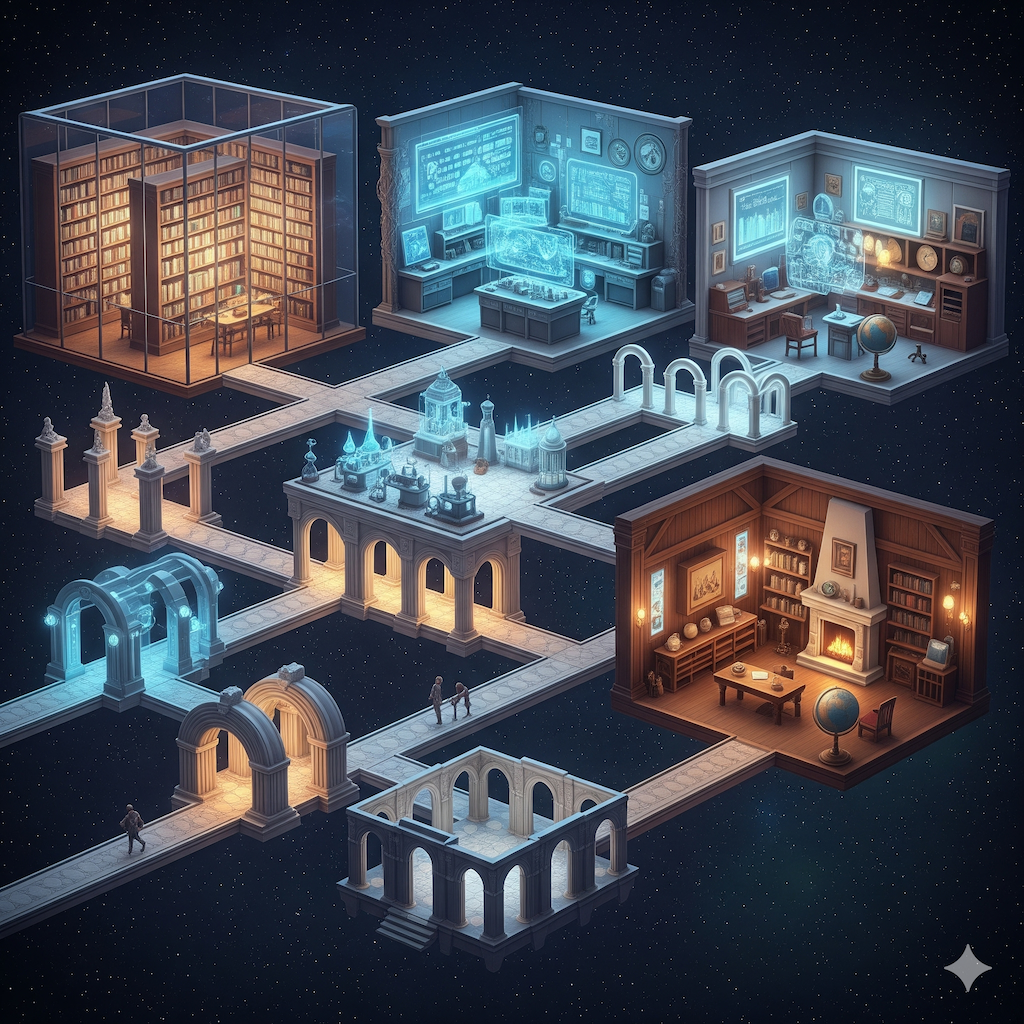
It’s a total bottleneck for our minds, but it’s one we’ve actually known how to solve for centuries. Think about the Method of Loci, the ancient technique of building a "Memory Palace" to recall information by mentally "placing" it in a familiar rooms. We’ve always known that our brains are world-class at spatial navigation, yet we still insist on burying our research in nested folders and 2D lists. It's now possible to build a persistent navigable 3D virtual environment to change that. I call it Study Hall.


Study Hall

Why Our Brains Need 3 Dimensions

In her book Mind in Motion, Tversky argues that spatial thinking is the foundation of all thought. Our brains didn't evolve to process abstract strings of text in a vacuum; they evolved to navigate forests, find trails, and remember where we hid the good berries.

"When thought overflows the mind, the mind puts it into the world." — Barbara Tversky

When we force our research into flat PDFs and tiny screens, we are essentially "underclocking" our mental hardware. Because we aren't moving (no "action") and there’s no depth (no "space"), we lose the benefit of spraction. By experiencing and creating artifacts of our thoughts in Study Hall, we’re finally using the brain's natural GPS to organize our ideas.

Digital Mise en Place

If you’ve ever watched a pro chef, they use a system called mise en place—basically, "everything in its place." Before they even turn on the stove, every knife, spice, and pan is exactly where it needs to be.

Imagine a virtual Writer’s Shed where you can do the same for your workspace. Instead of digging through folders, your tools are just there. You can "spin up" a clean-slate room, and when you return to a past room, your mental state is instantly restored because your scripts, whiteboards, and assistants are exactly where you left them, in 3D space.
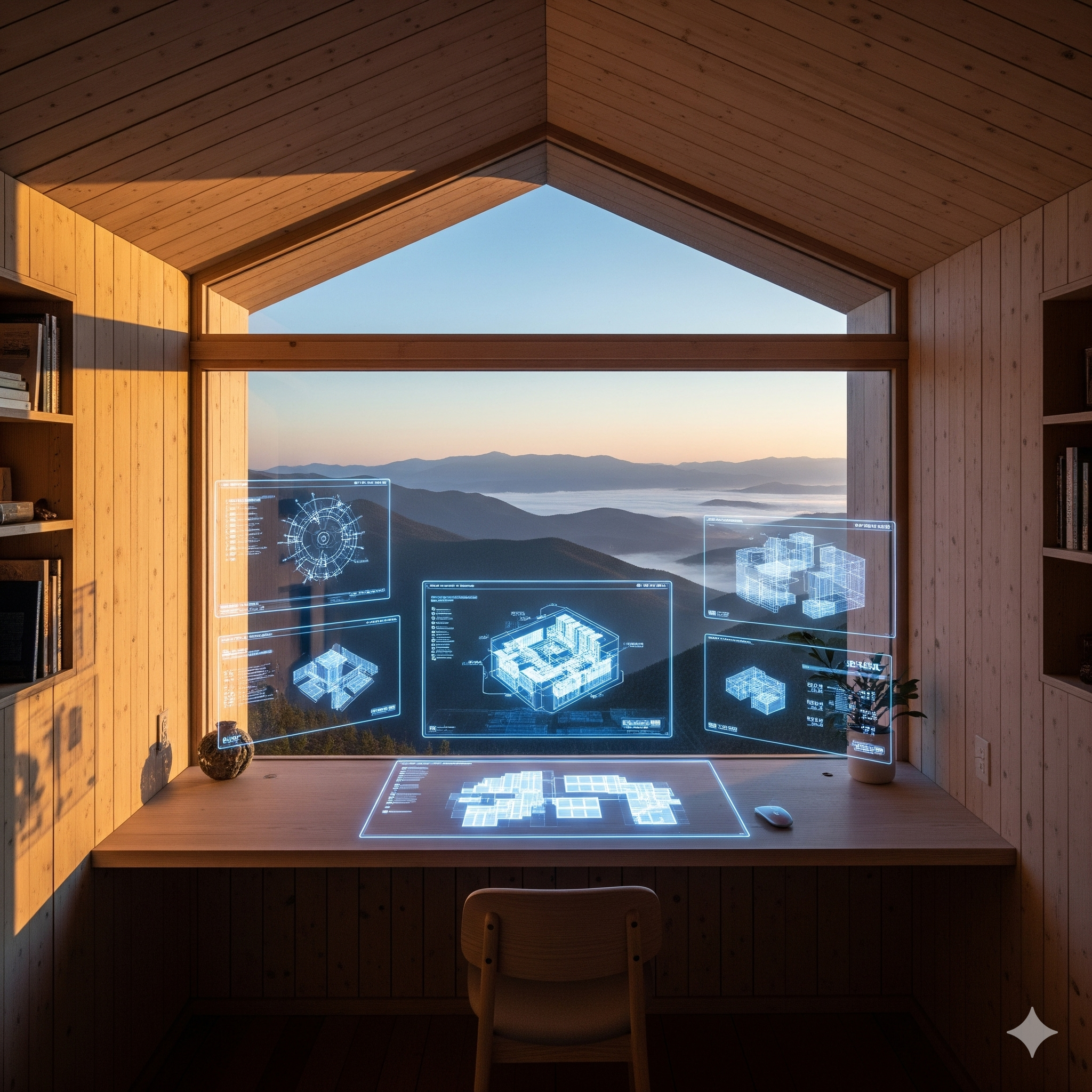
Adirondack Writer's Shed
Mise en Place: The persistent mental state

The Geometry of Logic

The name Study Hall is meaningful. In a standard notes app, the link between "Game Theory" and "AI Ethics" is just blue hyperlinked words.

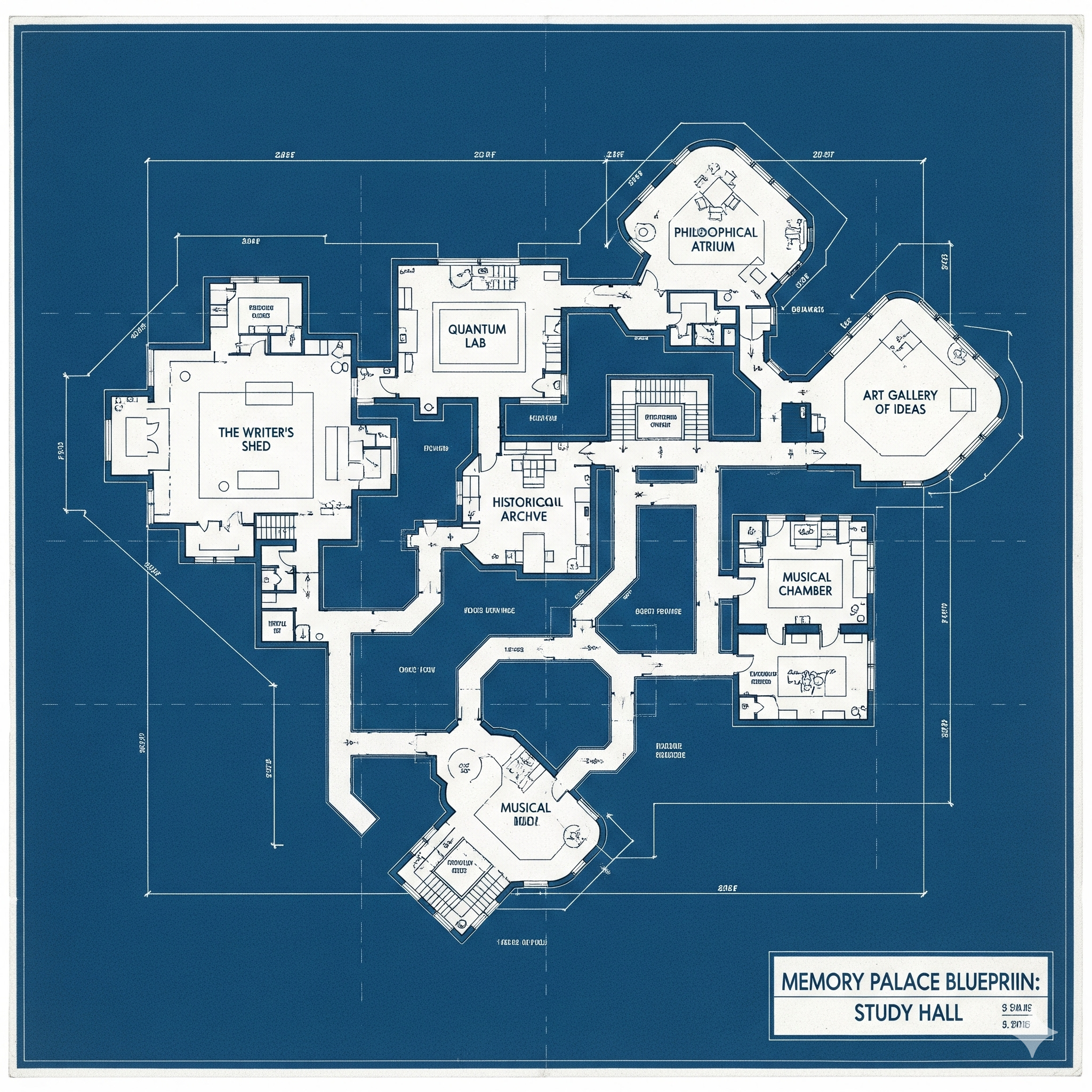
In Study Hall, that link is a literal corridor. Want to show a strong connection? Build a short, bright hallway. If a connection is a stretch, make it a long, winding tunnel. This lets you literally see the "shape" of your research and identify gaps in your logic physically.

Study Hall Blueprint
Structural blueprints of the logical mind

Thinking with Personas

The technology currently exists to populate these rooms with presistant Research Assistant Chatbots. By talking to these "inhabitants" in their specific spatial contexts, you’re creating memories that stick.

You aren't just reading about tensor calculus; you are discussing equations at a chalkboard with Albert Einstein inside a library overlooking a cloud inverted Adirondack peak. It’s harder to forget a breakthrough when it happeneing in a specific physical place and time.

Einstein Brainstorming
Collaboration in the 3rd dimension

The Big Picture

When we agument 2D documents by moving into a 3D spatial environment we’re finally giving our minds the room they need to move. We’re not just taking notes anymore; we’re building a world where we can supercharge our thinking.